
Kentwood City Directory Collections
Kentwood’s older resident trail is stored in Grand Rapids and Kent County collections, not in one city-only shelf. The present city came after many early sources, so a volume may describe Paris Township, Grand Rapids, or a suburban area instead. The Grand Rapids Public Library, or GRPL, holds the primary historical business, city, and telephone directory collection. Its archive description says the directories can include citizens, businesses, organizations, addresses, telephone numbers, occupations, and membership information. Treat every result as a dated, regional record and preserve the city or township printed in that volume.
| Collection | Years | Where Held | Access |
|---|---|---|---|
| Williams Grand Rapids Directory, City Guide and Reference | 1859/1860 | GRPL historical directories collection | Archive collection; confirm geography before applying it to modern Kentwood |
| R.L. Polk Grand Rapids city directories | 1865 to present, as stated in the GRPL House History guide | GRPL History Center | Physical directory research; selected scans are linked by GRPL |
| Grand Rapids Street and Avenue Guide and Directory of Householders | 1912 | GRPL public microfilm description | Microfilm and archive lead for street and house-number research |
| Suburban directories | 1957 to 1997 | GRPL guide’s suburban series | Broader suburban coverage, with volume-by-volume limits |
| Entire Kent County directories | Since 1999 | GRPL guide’s countywide series | Date-label each entry and confirm it against another source |
| Digitized R.L. Polk volumes | Selected 1889, 1891, 1911, 1919, and 1926; examples also include 1859, 1886, and 1924 | Google Books landing pages | Remote scan lead; individual image access varies |
The archive is about 29.1 linear feet in more than 50 boxes. Some volumes are fragile. Photocopying is limited to microfilmed material or needs staff permission, so a planned visit can be more useful than assuming every year is freely reproducible online.
Kentwood City Directory Shelves at GRPL
The GRPL House History guide is the best route into the shelves. It pairs city directories with real-estate listing cards, Sanborn maps, plat maps, assessor records, and digital collections. Directory volumes are physically available at the GR History Center, 111 Library Street NE, Grand Rapids, MI 49503. The collection contact listed in the research is 616-988-5497 and localhis@grpl.org. A house-history visit can be prepared through the archive request form, which visibly asks for a requester name and email and allows an anticipated arrival date and note.
The Library of Michigan complements that local collection with statewide and local historical materials. Its family-history materials include local histories, newspaper clippings, vital records, cemetery transcripts, and plat maps. Some FamilySearch material has on-site restrictions because the library is a FamilySearch Affiliate Library. The nearby Richard L. Root/Kentwood branch of Kent District Library offers public research space, computers, printing, and rooms, but the inspected branch source did not establish a city-directory holding list. For directory volumes, use GRPL or the Library of Michigan rather than assume the branch owns a particular year.
The Library of Michigan city directories and gazetteers page is a useful statewide holdings lead.
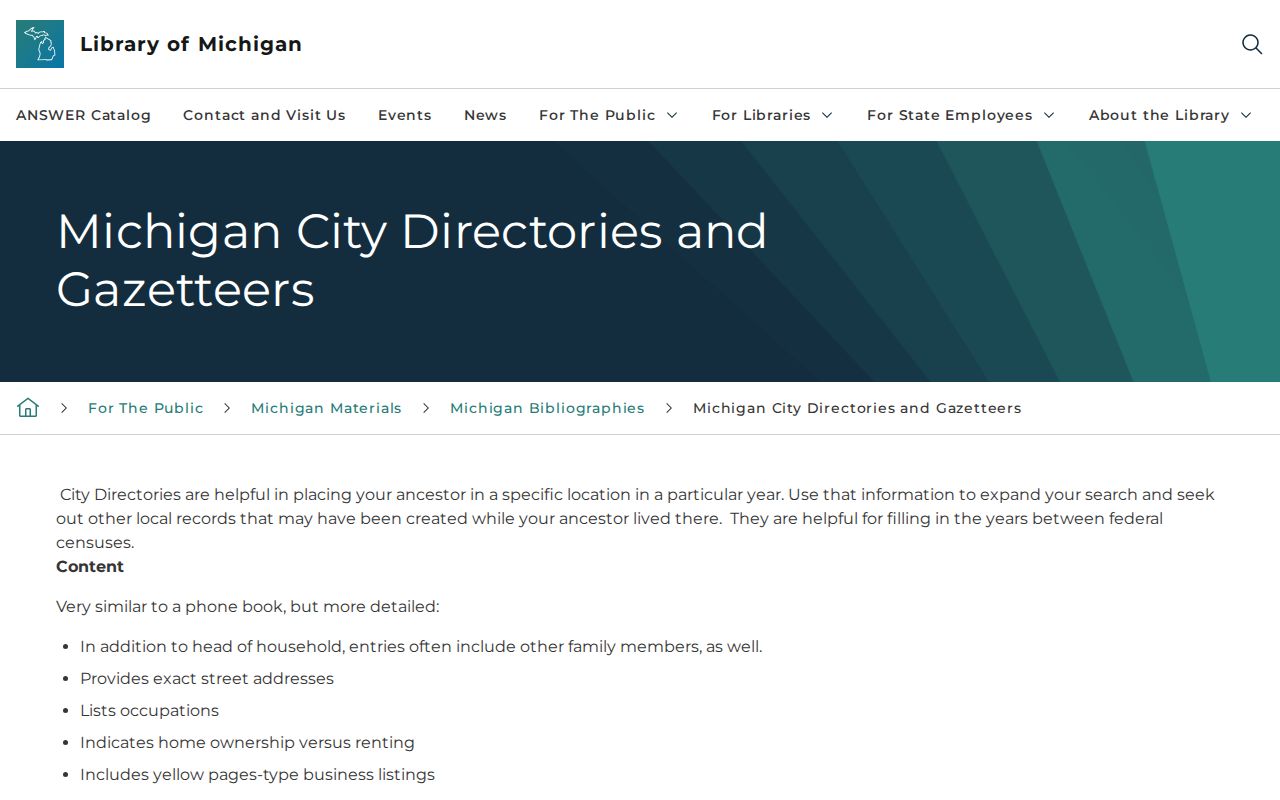
That collection route helps distinguish a directory lead from a confirmed image-level entry.
Kentwood City Directory Scans and Archives
Digitized volumes can narrow a search before a library visit. GRPL links HathiTrust and Google Books scans from selected years. The research documented Google Books landing pages for R.L. Polk volumes from 1889, 1891, 1911, and 1926, plus full-view examples for other years. The record is still a scan lead until the relevant page, publisher, year, and printed geography are checked. No individual image-level entry was inspected in the research, so a sample resident should not be invented from a catalog description.
Use the digitized Grand Rapids city-directory landing page to inspect the available volume controls.
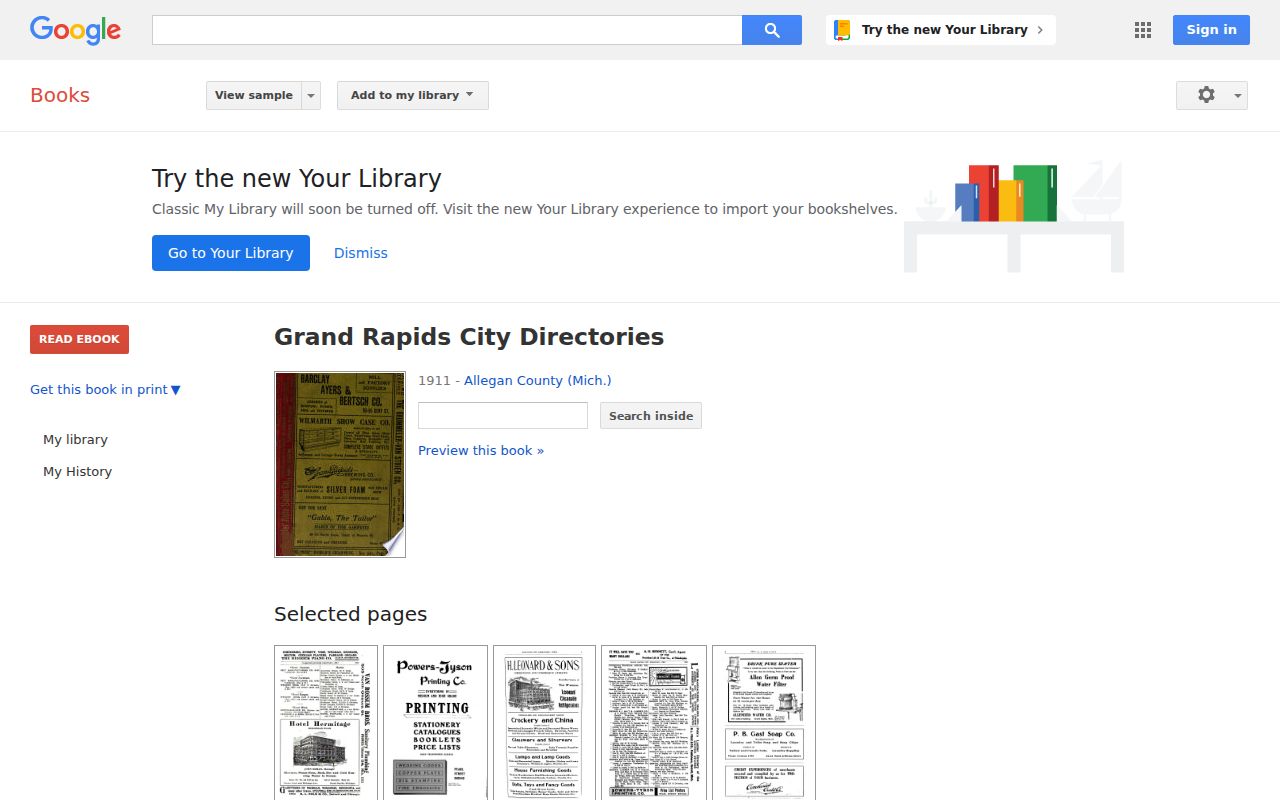
A scan can supply a page reference, but the printed page and its abbreviation key remain the evidence to save.
The Historical Society of Kent County research page supplies another route for reference works, maps, genealogies, cemetery records, photographs, manuscripts, oral histories, and vertical files. Its archive is being inventoried and catalogued through at least 2027. PastPerfect keyword search, staff research requests, appointment-dependent library access, and copy or scan fees are all documented access channels. It is a regional-history source, not a current list of residents.
The Michigan history county guides provide an archives route when the regional label or older custody is unclear.
Archive inventories change as cataloging progresses, so a missing online result should be noted as a gap rather than treated as proof that material does not exist.
Kentwood City Directory and the 1912 Reset
Address translation is the central Kentwood city directory problem. GRPL’s public microfilm description for the R.L. Polk 1912 Grand Rapids Street and Avenue Guide explains a major renumbering. It gives Canal Street becoming Monroe Avenue as an example of a street-name change. A modern Kentwood address should not be matched to a pre-1912 number until the old number, street name, and conversion evidence have been recorded.
Historic geography needs the same care. A directory may place an area under Grand Rapids or a township name rather than the current City of Kentwood. Start with the current parcel and address, find any former street spelling or legal description, then search the appropriate city, suburban, or county volume. The By Street directory has the modern address-record route once an older listing must be compared with a parcel.
Reading a Kentwood City Directory Entry
A directory entry is a compact publication record, not a biography. The Library of Michigan says directories can provide a head of household and other family members, exact address, occupation, ownership or status notation, yellow-page business information, and surname, street, or phone access. What appears in a particular line depends on its volume. Read the full page, nearby entries, and the volume’s key before drawing a conclusion from a short form such as “res.”, “wid.”, “mach hd,” or “bkpr.”
| Volume and page | Publisher, year, page or image number, and physical call number or scan source. |
|---|---|
| Name | Surname, given name, middle initial, and the spelling exactly as printed. |
| Address | Printed street address or street-section house number, retained before modern normalization. |
| Directory detail | Occupation, business, household or membership notation when that volume includes it. |
| Status notation | Ownership, telephone, or other status mark only when shown and interpreted through that volume’s key. |
| Confidence | Whether the printed geography and address map reliably to modern Kentwood. |
- Criss-cross directory
- A street-order reference that starts with an address or house number rather than a surname. GRPL’s 1912 street-and-avenue guide is the clearest local reverse-style lead; a separate current criss-cross database was not located.
- Householder index
- An index organized around the household or address association in a particular publication. It is a dated access path, not proof of ownership.
- Abbreviation key
- The volume’s explanation of its short forms. Preserve it with the entry because the same letters can carry different context across books.
Kentwood City Directories Beyond City Volumes
Broader series matter when an address falls outside the coverage of a Grand Rapids city volume. GRPL’s guide identifies suburban directories for 1957 through 1997 and entire Kent County directories since 1999. The oldest documented Williams volume, 1859/1860, is a starting point for regional context, not evidence that the modern city itself was listed. Each series has its own geographic reach and missing-year risk.
GRPL’s real-estate listing cards add a useful house-history layer from roughly the 1950s through the 1990s. They can contain a photograph and descriptive information for realtor-listed properties. They do not cover every owner-sold or land-contract transaction, and older buildings may have razed-building files. The Library of Michigan Family History page is another route for plat maps, cemetery material, clippings, and local histories that can test a directory lead.
That companion-source approach is especially useful for a city formed from older rural and township contexts.
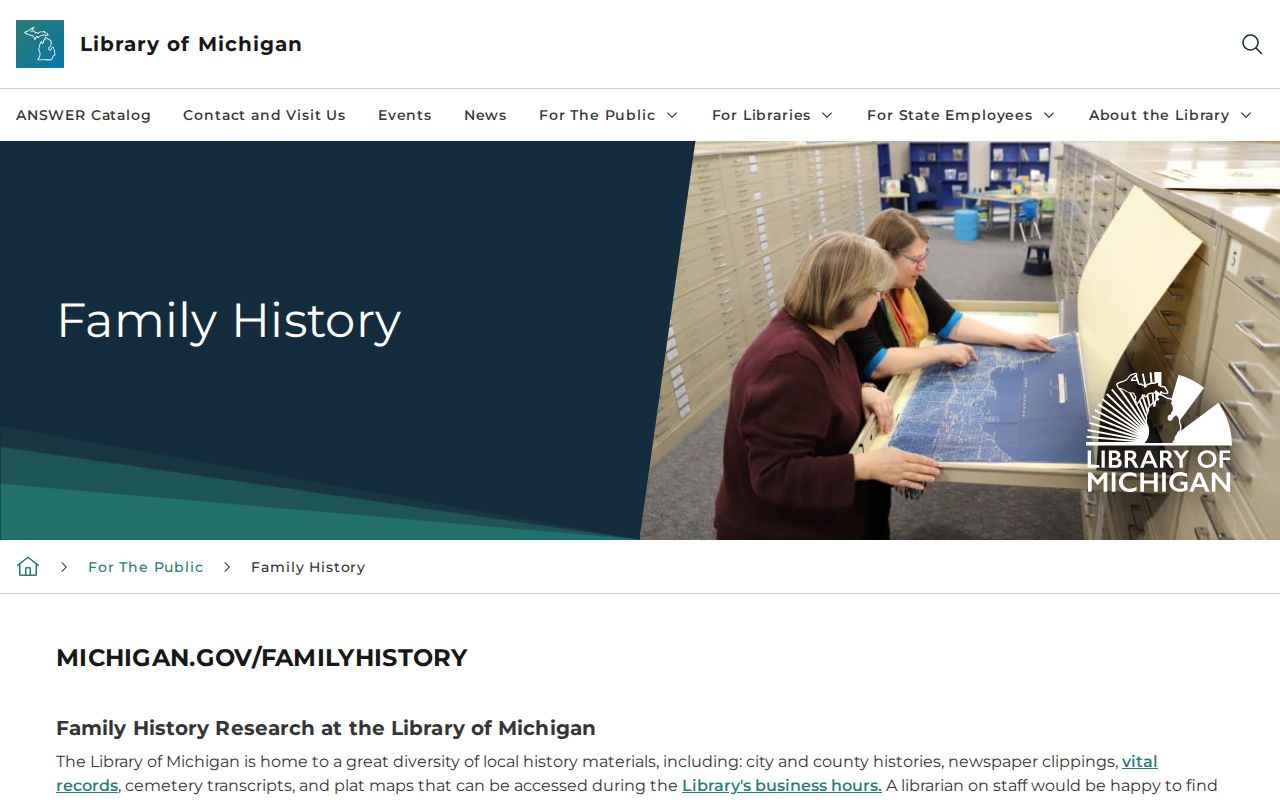
Family-history material can corroborate a date or place without turning a directory line into a claim of uninterrupted residence.
Tracing Families in Kentwood City Directories
Trace a household in a deliberate sequence. Start with a current address or known family name, then identify the historic municipality and any prior street spelling. Search both surname and street sections where available. The work is strongest when volumes before and after a suspected move, deed, or family event are checked. A gap can mean a move, a changed spelling, a different publisher’s coverage, or simply that the person was not listed. It should never be treated as proof that a person died or left the area.
- Record the known name, current or historic address, and the time period being tested.
- Check the 1912 renumbering or later street-name change before matching a house number.
- Search surname and street sections in the city, suburban, or county series that fits the year.
- Save the volume, publisher, date, page, address as printed, and abbreviation key.
- Repeat in surrounding years, then compare the dated listing with a deed, census, vital record, cemetery item, obituary, or listing card.
Kent County’s Genealogy page is the local gateway for certificate and index leads. Its mail instructions request full names, an event date or approximate date, and a five-year search window, with a stated three-to-four-week search time. Births under 100 years are restricted; death and marriage certificates have broader stated access. The county also links obituary indexes that can corroborate a candidate, while a certificate remains the stronger confirmation for a date or place.
Kentwood City Directory Limits
City directories are dated snapshots. A printed address does not prove that a person owned the property, lived there all year, or remained there without interruption. A telephone entry, an occupation, or a household notation has the same publication-date limit. Record the year and source location beside every conclusion. If a modern property record conflicts with a historic directory, test the address translation, jurisdiction label, parcel history, and spelling before treating either source as wrong.
Use only the detail needed for lawful family-history, house-history, civic, or archive research. Do not try to work around a protected or substitute address. The City Clerk administers Pine Hill Cemetery records, but no city-published online interment lookup was located; contact the clerk for that administrative route rather than implying that a transcription is complete. Note: A historical directory result becomes more reliable when its date, geography, page, and an independent corroborating record are preserved together.